

A general ledger is the backbone of any accounting system, providing a complete record of a business’s financial transactions in one centralized place. Often referred to as a g/l ledger, it organizes and summarizes data from all areas of a company, such as assets, liabilities, income, and expenses. These records are stored within general ledger accounts, which help track balances and ensure accurate financial reporting. By reviewing a clear general ledger, businesses can better understand how transactions flow through the accounting system and how financial statements like the balance sheet and income statement are created.
If you’re searching for “Bookkeeping Houston”, trust The Madtax with over 15 years of experience. We provide accurate, reliable, and professional bookkeeping services that keep your finances organized and stress-free.
What Does a General Ledger Include?
According to Business.com, a general ledger includes all the financial information a business needs to track and report its activity accurately. It is made up of individual general ledger accounts, each recording a specific type of transaction. Typically, a general ledger includes:
- Assets: cash, accounts receivable, inventory, equipment, and property
- Liabilities: loans, accounts payable, and other debts
- Equity: owner’s or shareholders’ equity and retained earnings
- Revenue: sales, service income, and other sources of income
- Expenses: operating costs such as rent, payroll, utilities, and marketing
Each account contains debits and credits, transaction dates, descriptions, and running balances, making the general ledger the primary source for creating accurate financial statements.
How the General Ledger Works
The general ledger works by systematically recording, organizing, and summarizing all of a business’s financial transactions. Here’s how the process typically flows:
- Transactions are recorded: Every financial activity, such as a sale, expense, or payment, is first documented in source documents like invoices, receipts, or bills.
- Entries are posted to the ledger: These transactions are then recorded as journal entries and posted to the appropriate general ledger accounts using debits and credits.
- Balances are updated: Each account in the general ledger is updated with a running balance, showing the current financial position.
- Accounts are reviewed and reconciled: Businesses regularly check the ledger for errors, ensuring debits and credits balance correctly.
- Financial statements are prepared: The final balances in the general ledger are used to create key reports like the income statement, balance sheet, and cash flow statement.
Types of General Ledger Accounts
The general ledger organizes all financial information into clear categories, making it easier to understand a business’s financial health at a glance. To keep things simple and user-friendly, these accounts are grouped into five main types, each explaining where money comes from, where it goes, and what the business owns or owes.
1. Asset Accounts
Asset accounts record everything your business owns or controls that has value. These are resources your business uses to operate and grow.
There are two common types of assets:
- Current assets: Items that can be turned into cash within a year, such as cash, bank balances, accounts receivable (money customers owe you), and inventory.
- Long-term assets: Items your business uses over a long period, like vehicles, machinery, office equipment, and buildings.
Asset general ledger accounts help you see how much value your business currently holds and how easily that value can be used or converted into cash.
2. Liability Accounts
Liability accounts show all the money your business owes to others. These obligations must be paid in the future.
They are usually divided into:
- Current liabilities: Short-term debts due within a year, such as unpaid supplier bills, credit card balances, wages payable, and taxes owed.
- Long-term liabilities: Debts that take longer to repay, like business loans or mortgages.
Tracking liability accounts in the financial ledger helps businesses manage debt, avoid late payments, and plan future cash needs.
3. Equity Accounts
Equity accounts represent the owner’s or shareholders’ ownership in the business. In simple terms, it’s what remains after liabilities are subtracted from assets.
These accounts may include:
- Owner or shareholder investments
- Retained earnings (profits kept in the business instead of paid out)
- Owner withdrawals or dividends
Equity accounts show how much value the business has created for its owners over time.
4. Revenue (Income) Accounts
Revenue accounts track money earned from business activities. This includes income from selling products, providing services, or other operating activities.
Examples include:
- Sales revenue
- Service income
- Interest or other operating income
These accounts help measure how well the business is performing and how effectively it generates income.
5. Expense Accounts
Expense accounts record all the costs required to run the business. These expenses reduce profits but are necessary for daily operations.
Common expense accounts include:
- Rent and utilities
- Payroll and employee benefits
- Marketing and advertising
- Office supplies and software
By reviewing expense accounts, businesses can control spending, reduce waste, and improve profitability.
What Does a General Ledger Look Like?
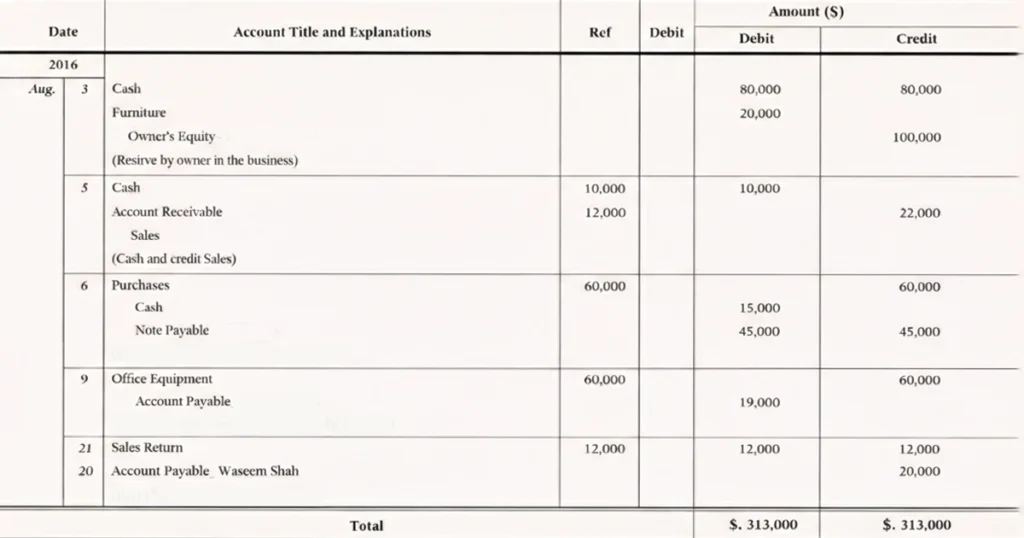
A general ledger usually looks like a structured table or report that lists accounts, transaction dates, descriptions, debit and credit amounts, and running balances. It shows how individual transactions are recorded and summarized, making it easy to track financial activity and understand how each account balance changes over time.
Below, we’ve shared a general ledger example so you can quickly and easily understand it through a visual.
What Is a General Ledger Code?
A general ledger code is a unique number or label assigned to each account in the general ledger to help identify it quickly. Instead of writing full account names every time, these codes make recording and tracking transactions faster and more accurate. Each code represents a specific account, such as cash, rent, or sales revenue. This system keeps financial records organized and reduces errors in accounting.
Example of general ledger codes:
- 1000 – Cash
- 1100 – Accounts Receivable
- 2000 – Accounts Payable
- 3000 – Owner’s Equity
- 4000 – Sales Revenue
- 5000 – Rent Expense
How the General Ledger Differs From Other Accounting Records
The general ledger is different from other accounting records because it acts as the main hub where all financial data comes together. Here’s a simple, side-by-side explanation to make the differences easy to understand:
1. General Ledger vs. General Journal
- General Journal: Records transactions first, in the order they happen, with full details.
- General Ledger: Organizes those transactions by account (cash, sales, expenses) to show balances.
2. General Ledger vs. Subsidiary Ledger
- Subsidiary Ledger: Provides detailed breakdowns of specific accounts, like individual customer or supplier balances.
- General Ledger: Shows the total balance for those accounts.
3. General Ledger vs. Trial Balance
- Trial Balance: A summary report listing all general ledger accounts and their balances at a specific time.
- General Ledger: The source from where those balances come.
4. General Ledger vs. Chart of Accounts
- Chart of Accounts: A list of all account names and codes used by the business.
- General Ledger: Contains the actual transactions and balances for those accounts.
5. General Ledger vs. Balance Sheet
- Balance Sheet: A financial statement showing assets, liabilities, and equity at a specific date.
- General Ledger: Supplies the data used to create the balance sheet.
In summary, the general ledger sits at the center of the accounting system—it collects data from journals, summarizes details from subsidiary ledgers, feeds the trial balance, and provides the numbers used in financial statements like the balance sheet.
Take Control of Your General Ledger With The Madtax
A well-maintained general ledger and organized accounting ledger are the foundation of accurate financial records and smart business decisions. If managing these feels overwhelming, The Madtax is here to help, offering reliable bookkeeping services in Houston that keep your finances clear, compliant, and stress-free.