

Financial statements are one of the most important tools in accounting and business management. Whether you’re running a small business or managing a large company, financial statements help you understand how money is coming in, where it is going, and how financially healthy your business is.
For business owners and entrepreneurs, understanding financial statements is essential for making smart financial decisions and maintaining accurate records, especially when working with professionals like Houston Bookkeeping Services, which helps ensure accuracy, compliance, and better financial planning for long-term business growth.
What Is a Financial Statement?
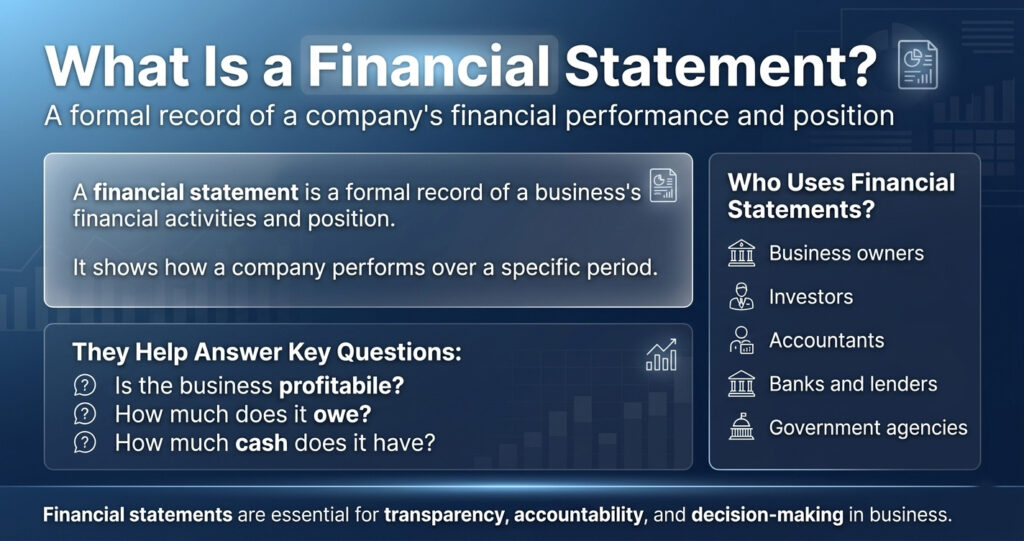
A financial statement is a formal record of a business’s financial activities and position. It provides a clear snapshot of how a company is performing over a specific period. Financial statements are used by:
- Business owners
- Investors
- Accountants
- Banks and lenders
- Government agencies
They help answer important questions such as:
- Is the business profitable?
- How much does it owe?
- How much cash does it have?
Financial statements are essential tools for transparency, accountability, and decision-making in business.
What Are the 4 Financial Statements?
Financial statements are the core reports used to evaluate a business’s financial performance and position. Each statement provides unique insights into different aspects of financial activity. Together, they give a complete picture of a company’s financial health.
1. Income Statement
The income statement shows a company’s financial performance over a specific period. It summarizes all revenues earned and expenses incurred during that time. The result indicates whether the business made a profit or suffered a loss.
2. Balance Sheet
The balance sheet presents a snapshot of a company’s financial position at a specific point in time. It lists assets, liabilities, and owner’s equity in detail. This helps stakeholders understand what the business owns and owes.
3. Cash Flow Statement
The cash flow statement tracks all cash inflows and outflows within a business. It is divided into operating, investing, and financing activities. This statement shows how well a company manages its cash position.
4. Statement of Changes in Equity
The statement of changes in equity explains how the owner’s interest in the business has changed over time. It includes profits, losses, dividends, and additional investments. This helps track overall changes in ownership value.
Which Financial Statement Is Prepared First?
The income statement is usually prepared first because it shows the net profit or loss of a business over a specific period. This figure is then used as the basis for preparing the remaining financial statements in a correct sequence.
- Net profit is transferred to the balance sheet
- The balance sheet helps in preparing the cash flow statement
- Finally, changes in equity are calculated
- This order ensures accuracy and consistency in financial reporting
How to Read Financial Statements
Reading financial statements may seem complex at first, but it becomes much easier once you understand their basic structure and purpose. Each statement provides different insights into a business’s financial performance and position.
Income Statement
- Total revenue
- Expenses
- Net profit or loss
Balance Sheet
- Assets (cash, inventory, equipment)
- Liabilities (loans, debts)
- Equity (owner’s value in the business)
Cash Flow Statement
- Cash from operating activities
- Investing activities
- Financing activities
Understanding these sections helps you determine whether a business is growing, stable, or facing financial challenges.
How to Prepare Financial Statements
Preparing financial statements involves systematically recording, organizing, and summarizing financial data into structured reports. This process ensures that a business’s financial position and performance are accurately represented.
How to Prepare Financial Statements
Preparing financial statements involves systematically recording, organizing, and summarizing financial data into structured reports. This process ensures that a business’s financial position and performance are accurately represented and reliable for decision-making.
Steps to Prepare Financial Statements:
- Record Transactions: Track all business income and expenses in a consistent and timely manner. Every sale, purchase, payment, or receipt should be properly documented using invoices, receipts, or accounting software to maintain accuracy.
- Organize Accounting Records: Use bookkeeping systems or accounting software to properly categorize all financial transactions. Group entries into relevant accounts, such as revenue, expenses, assets, and liabilities, for better clarity.
- Prepare Trial Balance: Summarize all ledger accounts to verify that total debits equal total credits and ensure accuracy. This step helps identify any errors in recording before preparing final reports.
- Create Financial Statements: Prepare the main reports, including the income statement, balance sheet, and cash flow statement. These statements collectively show the business’s performance, financial position, and cash movement.
- Review for Accuracy: Carefully check all figures to ensure they are correct, complete, and properly classified. Reconcile bank statements and fix any discrepancies to ensure reliable financial reporting.
Why Financial Statements Are Important
Financial statements play a key role in understanding a business’s financial health and performance. They provide structured and reliable information that helps owners and stakeholders make informed decisions.
- Help track business performance
- Support tax filing and compliance
- Assist in securing loans or investments
- Identify financial strengths and weaknesses
- Guide business decision-making
These statements make it easier to understand the profitability, cash flow, and overall financial stability of a business.
Common Mistakes When Preparing Financial Statements
Many small businesses make errors while preparing financial statements, which can affect accuracy and financial decision-making. These mistakes often occur due to poor record-keeping or a lack of accounting knowledge.
- Mixing personal and business expenses
- Missing transactions
- Incorrect classification of income or expenses
- Not reconciling bank statements
- Failing to update records regularly
These errors can lead to inaccurate financial reporting, confusion, and poor business decisions.
Role of Bookkeeping Services
Professional bookkeeping plays an important role in maintaining accurate and organized financial records throughout the year. It helps businesses stay on track with their finances and avoid costly mistakes.
- Maintain clean and organized financial records
- Prepare accurate financial statements
- Ensure compliance with tax regulations
- Support better financial decision-making
This is especially beneficial for small businesses that do not have in-house accounting teams or dedicated financial staff.
Smarter Finances, Stronger Business Growth
Financial statements are essential for understanding your business’s true financial position and making smarter decisions. When they are prepared correctly, they give you clarity, control, and confidence in managing your finances.
To make this process easier and more reliable, The MadTax provides expert bookkeeping and accounting support tailored for small and growing businesses. With professional assistance, you can ensure accurate reporting, stay compliant, and focus on scaling your business without financial stress.
Key Takeaways
- Financial statements show a business’s financial health
- The four main statements are income, balance sheet, cash flow, and equity statements
- Income statements are typically prepared first
- They are essential for decision-making, taxation, and business growth
- Proper bookkeeping ensures accuracy and compliance